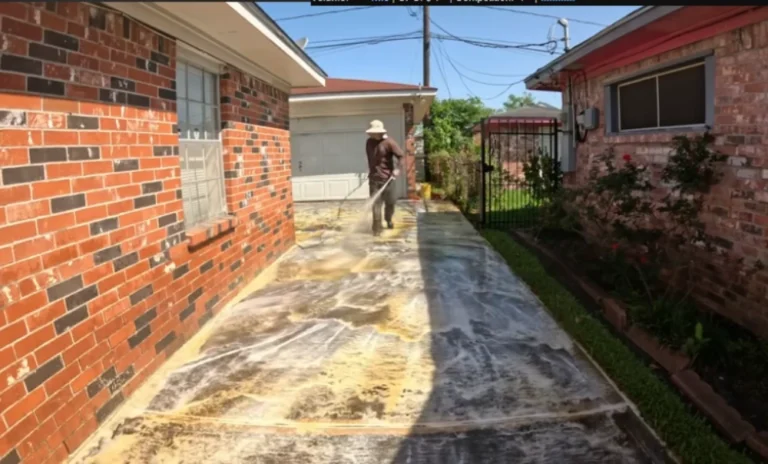
Oil Stains on Concrete: DIY vs Professional Removal in Wesley Chapel
Oil stains on concrete go deep because concrete is porous. A fresh spill can be soaked up with an absorbent. An old stain needs a degreaser, a poultice, or a professional. Pressure alone rarely works, and oily rinse water should never go down a storm drain.
How Do You Get Oil Stains on Concrete Out?
How do you remove oil from a concrete driveway? For a fresh spill, cover it with an absorbent like cat litter and let it soak. For an old stain, use a concrete degreaser with a stiff brush, then rinse. Stubborn stains need a poultice or a professional. Pressure alone rarely lifts oil.
Concrete is a network of cement paste with tiny pores. Oil soaks into those pores like water into a sponge. The longer it sits, the deeper it goes. That is why the first hour matters more than any product you buy later.
| Stain age | First step | Next step |
|---|---|---|
| Fresh, under a day | Cover with an absorbent such as cat litter and let it soak | Sweep it up, then scrub with a degreaser |
| Days to weeks | Apply a concrete degreaser, scrub, and let it dwell | Rinse, then repeat if the stain is still dark |
| Months to years | Degreaser and brush | Poultice, or call a professional |
Why Does Pressure Washing Alone Not Remove Oil?
Water does not dissolve oil. A strong stream can spread a fresh spill into a bigger spot and push oil deeper. A degreaser breaks the oil loose first, and then the rinse carries it away. Most cleaning guides agree on that order.
The paver industry follows the same order. ICPI says to remove stains first, then clean the whole surface, then stabilize or seal. It also says to use products made for concrete pavers. See the CMHA hardscapes technical resources. Our guide to DIY pressure washing mistakes shows how rental machines etch concrete when people chase a stain with more pressure.
Fresh Spill or Old Stain: What Do You Do First?
What should you do about a fresh oil spill?
- Stop the leak and keep cars off the area.
- Cover the spill with a thick layer of absorbent, extending past the edges.
- Let it soak, then sweep it into a bag for disposal.
- Scrub the spot with a concrete degreaser and a stiff brush.
- Rinse in small amounts of water, and keep the runoff off the street.
What should you do about an old oil stain?
- Apply a concrete degreaser, and let it dwell for the time on the label.
- Scrub with a stiff brush, and rinse.
- Repeat if needed. Old stains often take more than one round.
- For deep stains, a poultice, which is a paste of absorbent and a cleaner, can pull oil out of the pores.
Bleach does not work on oil. It is made for algae. Save it for green growth, and use a degreaser for oil.
Can You Remove Oil Stains Yourself?
Small, fresh spots on plain concrete are a fair DIY job. Large, old, or deep stains are not. Pavers, stained concrete, and natural stone can be damaged by the wrong product. Read labels, wear gloves and eye protection, keep pets away, and wet down plants first.
If you try it and the stain stays dark after two rounds, stop. More scrubbing and more pressure will not fix it. At that point a professional method is cheaper than a damaged surface.
Where Does the Wash Water Go?
Storm drains in Florida lead to local water bodies. Runoff from driveways picks up oil and grease on the way, as a Florida stormwater guide explains. The Florida DEP says wash water from vehicle and equipment washing can contain significant oil, grease, and petroleum products. It recommends storm drain covers or mats to keep it out of the drain.
At home, that means three simple rules. Soak up oil before you rinse. Do not let oily rinse water run into the street or a storm drain. Ask your waste hauler or county how to dispose of oily absorbent. A professional crew should also contain and control wash water. Ask how they do it.
When Should You Call a Professional?
- The stain is old, dark, or large.
- The surface is pavers, stained concrete, or natural stone.
- The stain sits near a pool deck or entry where looks matter.
- You have an HOA deadline.
- The stain keeps coming back after you clean it.
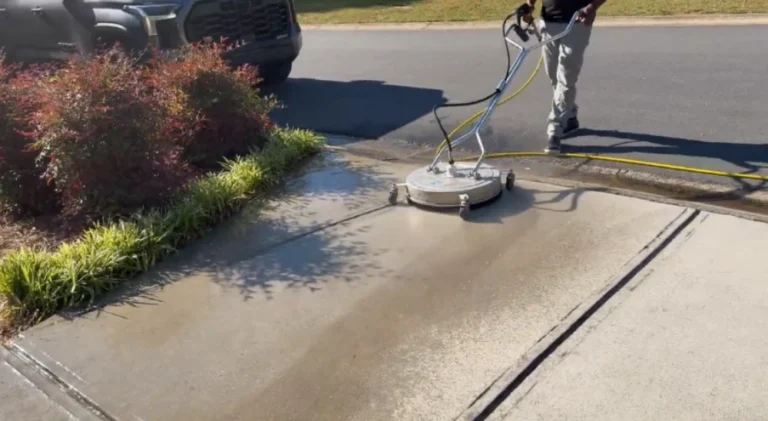
A pro treats the stain first, then cleans the whole surface so the spot does not look like a clean patch. Some crews also use hot water equipment on grease. Our rust and stain removal page and pressure cleaning driveways page explain how we work. For orange stains, read rust stains on driveway.
Can Oil Stains Be Removed Completely?
Often, but not always. Old oil can leave a faint shadow, sometimes called a ghost stain, because some of it has soaked deep into the pores. The goal is to lift as much as possible and keep the spot from getting worse.
Sealing the surface after cleaning helps resist new oil. See our paver sealing guide for how sealing works. For the surface method itself, read pressure washing vs soft washing.
Oil Stains, HOAs, and the Water Order in Wesley Chapel
Dark driveway stains can draw an HOA notice in communities like Wiregrass Ranch, Union Park, Meadow Pointe, and Epperson. See what HOA boards look for to understand how notices work.
Pasco County is under a water shortage order through March 31, 2027. The District allows pressure washing before painting and sealing, so a stain job that ends with a sealer fits that exception. A purely cosmetic wash is a gray area, so confirm it with the county. See Pasco County water restrictions and pressure washing.
Oil Stain Removal FAQ
Will pressure washing remove oil stains?
Not by itself. Water does not dissolve oil, and a strong stream can spread a fresh spill. A degreaser breaks the oil loose first, and then a rinse carries it away.
Does kitty litter work on oil stains?
On a fresh spill, yes. Cat litter or another absorbent soaks up oil before it sets. It does not remove oil that has already soaked deep, so follow with a degreaser.
Does bleach remove oil stains?
No. Bleach is made for algae and mildew. Use a concrete degreaser for oil, and follow the label.
Can an old oil stain be fully removed?
Sometimes. Old oil soaks deep and can leave a faint shadow. Repeated degreasing or a poultice can lift most of it. A professional can tell you what is realistic.
Where can the rinse water go?
Not into the street or a storm drain. Florida DEP guidance says wash water from vehicle and equipment cleaning can contain oil, grease, and petroleum products. Soak up oil first and keep runoff on your property.
Should I seal the concrete after removing oil?
A sealer can help resist new oil and make later cleanups easier. It does not hide old stains, so clean first. For pavers, ICPI says to remove stains before sealing.
Do water restrictions affect oil stain removal?
Pasco County is under a water shortage order through March 31, 2027. Washing before painting and sealing is allowed, and purely cosmetic jobs should be confirmed with the county first.
See more answers in our pressure washing FAQ or browse our pressure washing tips blog.
More Pressure Washing Guides
Keep reading for related questions from Wesley Chapel homeowners.
- Rust Stains on Driveway: why rust stains come back
- Pressure Washing vs Soft Washing: which method each surface needs
- DIY Pressure Washing Mistakes: what goes wrong when you wash it yourself
- Paver Sealing Cost in Wesley Chapel: what a full clean and seal includes
- How Often to Pressure Wash in Florida: how often each surface needs cleaning
- What HOA Boards Look For: how violation notices and fines work
- Pressure Washing Cost in Wesley Chapel: what drives the price of a cleaning
- Pasco County Water Restrictions and Pressure Washing: what the water shortage order allows
- How to Clean a Concrete Driveway in Florida: how to clean a concrete driveway
Stubborn Oil Stain? Call for a Free Estimate
Tell us your neighborhood and how long the stain has been there, and we will explain what is realistic.