Pressure Washing vs Soft Washing: Which Does Your Wesley Chapel Home Need?
Pressure washing vs soft washing comes down to the surface. Hard surfaces like concrete can take more pressure. Roofs, stucco, siding, and screens need low pressure and a cleaning solution. Most homes need both methods on different surfaces, and the wrong choice costs more than the wash.
Pressure Washing vs Soft Washing: What Is the Difference?
What is the difference between pressure washing and soft washing? Pressure washing uses a strong stream of water to blast dirt off hard surfaces. Soft washing uses low pressure and a cleaning solution to loosen algae and mildew, then rinses. Soft washing is for delicate or porous surfaces. Pressure washing is for hard ones.
Consumer Reports says a garden hose delivers about 50 psi, while a pressure washer can reach 1,500 to 4,000 psi. That gap is why the method matters. A stream that cleans a driveway can strip a roof.
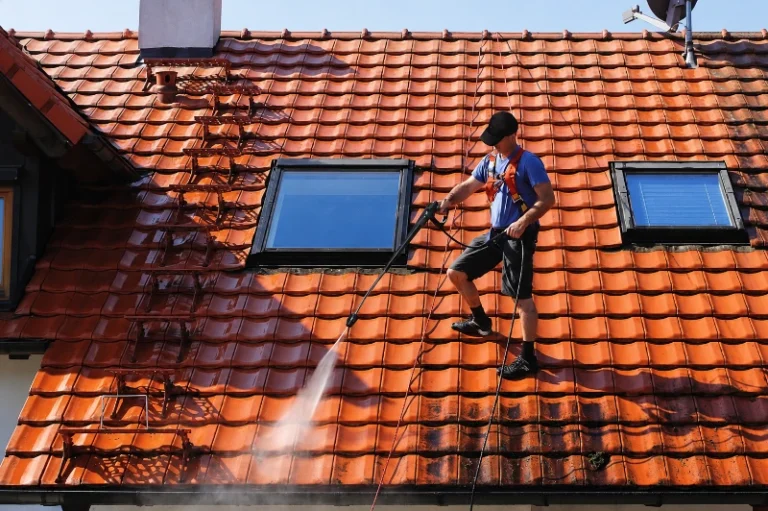
Soft washing is not a marketing trick. It follows what the makers say. The Asphalt Roofing Manufacturers Association says to never use a pressure washer on an asphalt shingle roof. Stucco maker Sto Corp. says never go above 500 psi on stucco. Vinyl siding guidance says to keep the stream straight and never aim it upward.
Which Method Does Each Surface Need?
Use this table as a starting point. Your surface maker’s instructions always come first, and a test spot is smart on any new surface.
| Surface | Usual method | Why |
|---|---|---|
| Asphalt shingle roof | Soft wash | ARMA says high pressure strips granules |
| Stucco and painted walls | Soft wash | Sto says never above 500 psi |
| Vinyl siding | Soft wash or gentle rinse | Water can be driven behind panels |
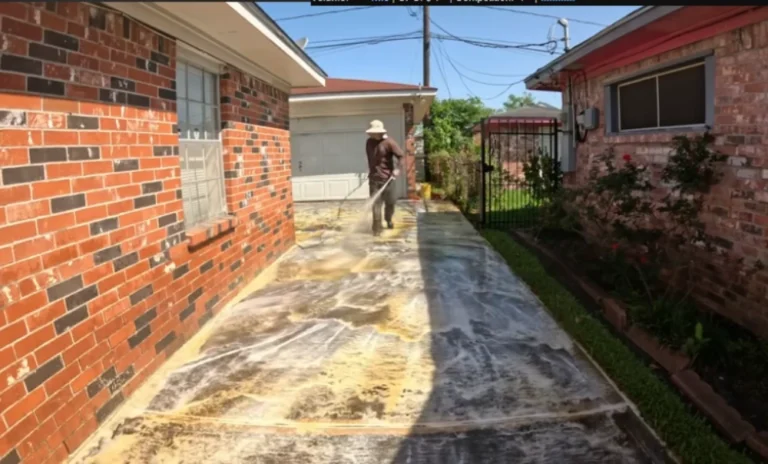
| Concrete driveway and sidewalk | Pressure washing with a surface cleaner | Hard surface that handles more force |
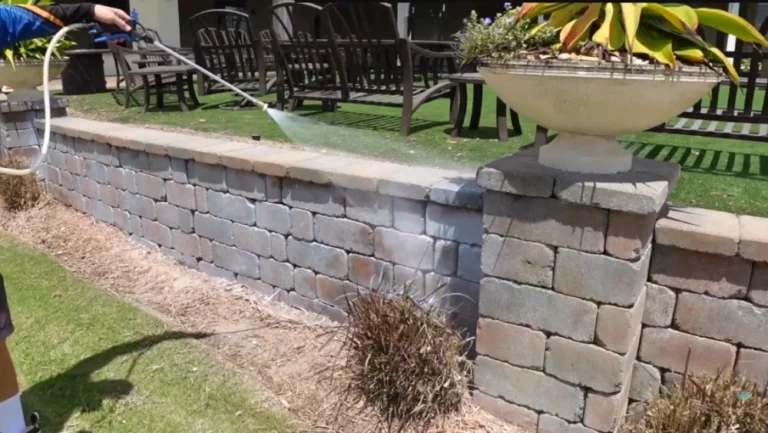
| Pavers | Low pressure, wide nozzle, then re sand | High pressure blasts out joint sand |
| Fences | Soft wash | High pressure can raise and splinter wood |
| Screens and lanai | Soft wash | Screens tear under a strong stream |
| Gutters, exterior | Soft wash | Cleaning solution lifts the streaks |
For pavers, ICPI says to use a low angle, wide nozzle to keep from dislodging the joint sand. See the CMHA hardscapes technical resources and our paver sealing guide.
When Is Pressure Washing the Better Choice?
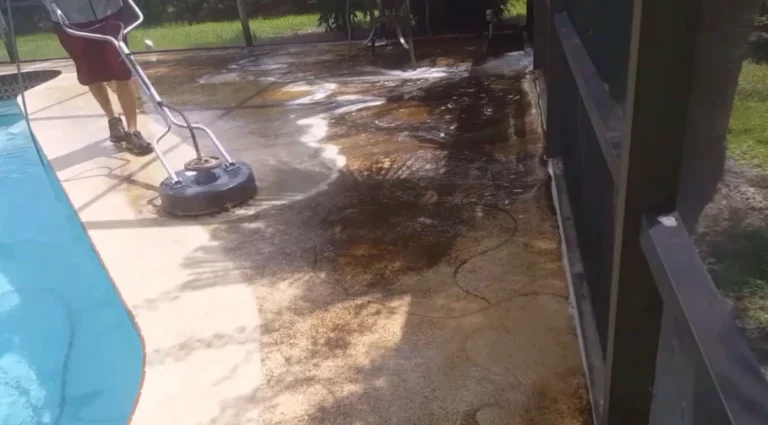
Pressure washing is best on hard, sound surfaces with heavy buildup. Even then, technique matters. Uneven passes leave tiger stripes, and a narrow tip held close can etch concrete. Read DIY pressure washing mistakes for how that happens.
- Concrete driveways, sidewalks, and garage floors with heavy dirt.
- Oil and tire marks, with the right degreaser.
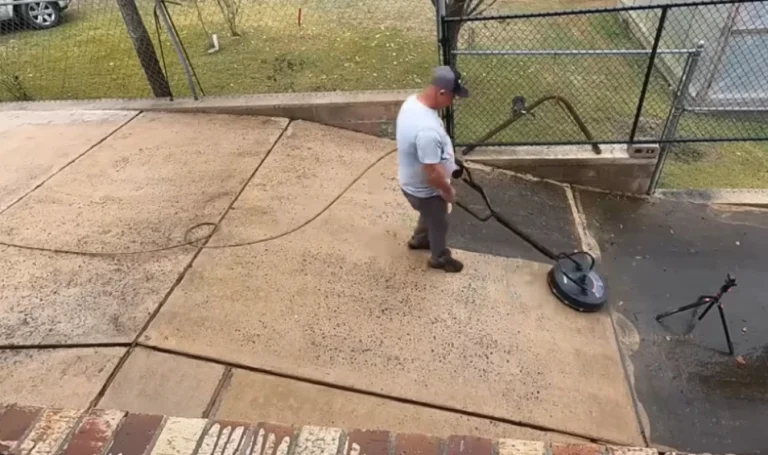
- Flat concrete with a surface cleaner, which keeps passes even.
- Hard to reach, sound masonry that the maker allows.
Our pressure cleaning driveways page explains how we keep passes even.
When Is Soft Washing the Better Choice?
Soft washing is best on roofs, stucco, siding, screens, fences, and anything porous or fragile. It also fits jobs where you need to kill the growth, not just rinse it. Sto says bleach is needed to kill the organisms that cause algae and mildew, or they come back.
- Roofs with black streaks. See black streaks on roof shingles.
- Stucco and siding with green algae. See green algae on stucco and siding.
- Stucco you worry about damaging. See whether pressure washing can damage stucco or vinyl.
- Fences, screens, and gutters with algae buildup.
Our page on how soft washing works explains the steps, and our roof soft washing page covers roofs.
Does Soft Washing Use Bleach, and Is It Safe for Plants?
Often yes. Roof and stucco makers describe bleach based solutions for algae. Crews dilute the solution, wet plants before, and rinse after. Ask any company what they use and how they protect landscaping. A good answer is specific, not vague.
Bleach can dull some painted finishes and burn plants if it is handled badly. That is why a test spot and plant protection are part of every job, not extras.
Why Not Just Pressure Wash Everything?
Because the wrong method costs more than the wash. High pressure can strip shingle granules, erode stucco, drive water behind vinyl, blast out paver joint sand, and tear screens. Those are repairs, not cleaning. Some can also put a warranty at risk, so check your terms.
If you rent a machine, test it on a hidden spot first and keep the tip wide. Better yet, match the method to the surface using the table above.
How Do You Pick a Company That Uses the Right Method?
- Ask what method they use on your roof. The only right answer is low pressure.
- Ask what pressure they use on stucco. It should be well under 500 psi.
- Ask how they protect plants, windows, and electrical parts.
- Ask about insurance and a guarantee. See our licensing and insurance page and guarantee.
- Ask for the scope and price in writing. See our pressure washing cost guide.
Our process page shows how a visit works from start to finish.
Pressure Washing vs Soft Washing in Wesley Chapel
A typical Wesley Chapel home mixes several surfaces: a roof, walls, a driveway, a lanai, and maybe a fence. That means one visit often uses both methods. Communities like Wiregrass Ranch and Meadow Pointe have all of these, and active HOAs. See what HOA boards look for if you received a notice.
Pasco County is under a water shortage order through March 31, 2027. The District allows pressure washing before painting and sealing, and purely cosmetic jobs should be confirmed with the county. See Pasco County water restrictions and pressure washing. For the best months to book, read the best time to pressure wash Wesley Chapel guide.
Soft Washing and Pressure Washing FAQ
Is soft washing better than pressure washing?
Neither wins everywhere. Soft washing is for roofs, stucco, siding, screens, and fences. Pressure washing, done with care, suits hard concrete with heavy buildup. Most homes need both.
Does soft washing really kill algae?
The cleaning solution does the work. Sto says bleach is needed to kill the organisms behind algae and mildew, and it needs about 15 minutes of contact. ARMA notes that roof results are temporary because spores keep arriving.
Is soft washing safe for plants?
It is when done right. Crews dilute the solution, wet plants before, and rinse after. Ask any company how they protect landscaping, and keep pets and children away during the job.
Can pressure washing damage my roof?
Yes. ARMA says never use a pressure washer on an asphalt shingle roof, because it strips granules and can lead to early failure. Soft washing uses low pressure instead.
What psi is soft washing?
There is no single number. Makers set the limits. Sto, for example, says never above 500 psi on stucco. A garden hose is about 50 psi, according to Consumer Reports.
Which costs more, pressure washing or soft washing?
Price depends on size, surface, and buildup, not on the method alone. See our cost guide for typical ranges and how to compare quotes.
Do water restrictions affect either method?
Pasco County is under a water shortage order through March 31, 2027. Washing before painting and sealing is allowed, and purely cosmetic jobs should be confirmed with the county first.
See more answers in our pressure washing FAQ or browse our pressure washing tips blog.
More Pressure Washing Guides
Keep reading for related questions from Wesley Chapel homeowners.
- DIY Pressure Washing Mistakes: what goes wrong when you wash it yourself
- Can Pressure Washing Damage Stucco or Vinyl Siding: how much pressure stucco and vinyl can take
- Black Streaks on Roof Shingles: why roofs get black streaks
- Green Algae on Stucco and Siding: why algae grows on walls
- Paver Sealing Cost in Wesley Chapel: what a full clean and seal includes
- Pressure Washing Cost in Wesley Chapel: what drives the price of a cleaning
- How Often to Pressure Wash in Florida: how often each surface needs cleaning
- Pasco County Water Restrictions and Pressure Washing: what the water shortage order allows
Not Sure Which Method Your Home Needs? Call for a Free Estimate
Tell us your neighborhood and what you want cleaned, and we will match the method to each surface.